Rank #47
Master's Degree•Sustainability & Climate
MSc in Sustainable Energy Technology
Delft University of Technology•Delft, Netherlands
Annual Tuition
€21,500 / year
Duration:2 years•Pace:full-time•Language:English

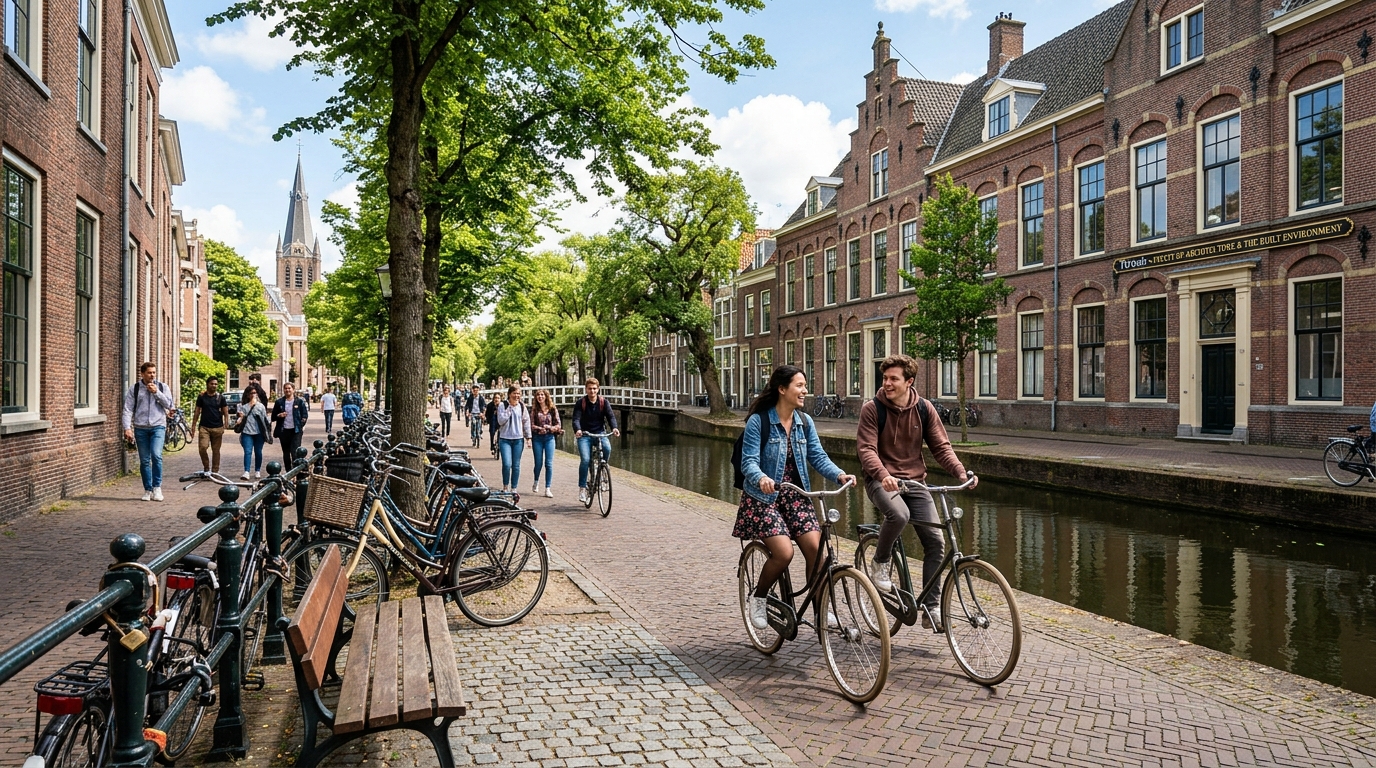
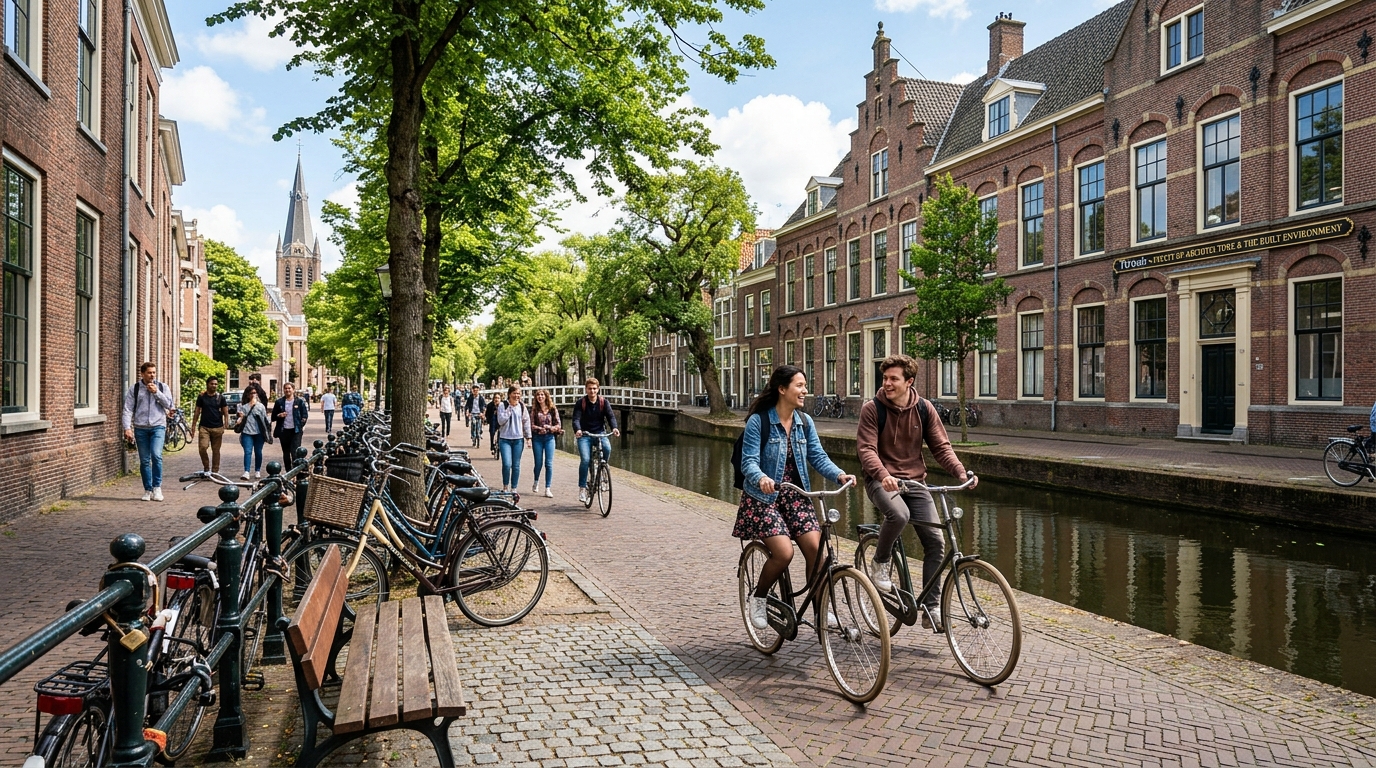
A continental pioneer in English-taught higher education, characterized by egalitarian problem-based learning, high-tech engineering clusters, and vibrant cycling culture.
Up to 16 hours/week with employer work permit (TWV)
Orientation Year (Zoekjaar): 1 full year of unrestricted employment rights
Connect with our admissions desk to explore visa criteria, blocked account requirements, and public university application deadlines.
Delft University of Technology•Delft, Netherlands
Everything you need to know about student visas, tuition, living costs, work rights, and admissions in Netherlands.
Yes! The Netherlands is continental Europe's leading provider of English-taught higher education. Dutch universities offer over 2,100 programs taught completely in English, spanning undergraduate and master's degrees in engineering, business, computer science, law, and environmental science. Furthermore, over 95% of the Dutch population speaks fluent English.
The Zoekjaar (Search Year) is a 1-year residence permit granted to graduates of Dutch research universities and universities of applied sciences. It allows you to work without any restrictions—meaning employers do not need to sponsor a work permit or satisfy high-salary thresholds. Within this year, you can transition smoothly into a Highly Skilled Migrant residence permit.
Dutch higher education is renowned for Problem-Based Learning (PBL), a student-centered pedagogical model where students work in small groups with tutors to analyze real-world case studies, debate solutions, and collaborate on practical projects. This approach fosters strong critical thinking, independent problem-solving, and professional teamwork skills valued by global employers.
For non-EU/EEA international students, bachelor's degree tuition ranges from €9,000 to €16,000 per year, and master's degree tuition ranges from €14,000 to €22,000 per year. Living expenses average €1,000 to €1,450 per month including student housing, food, transportation, and mandatory Dutch student health insurance.
Non-EU students are permitted to work up to 16 hours per week during the academic year, or full-time during the summer months (June, July, and August). The employer must obtain a free work permit (TWV) on your behalf from the Dutch Employee Insurance Agency (UWV), which is a standard procedure for enrolled international students.
In the Netherlands, prospective students do not apply for their residence permit (VVR) individually. Instead, after you accept your university offer and transfer the required tuition and living maintenance funds, the university submits the MVV entry visa and VVR residence permit application directly to the Dutch Immigration and Naturalisation Service (IND) on your behalf.

Have questions about university eligibility, application deadlines, or visas? Submit your enquiry and our admissions team will guide you.